

Business Automation
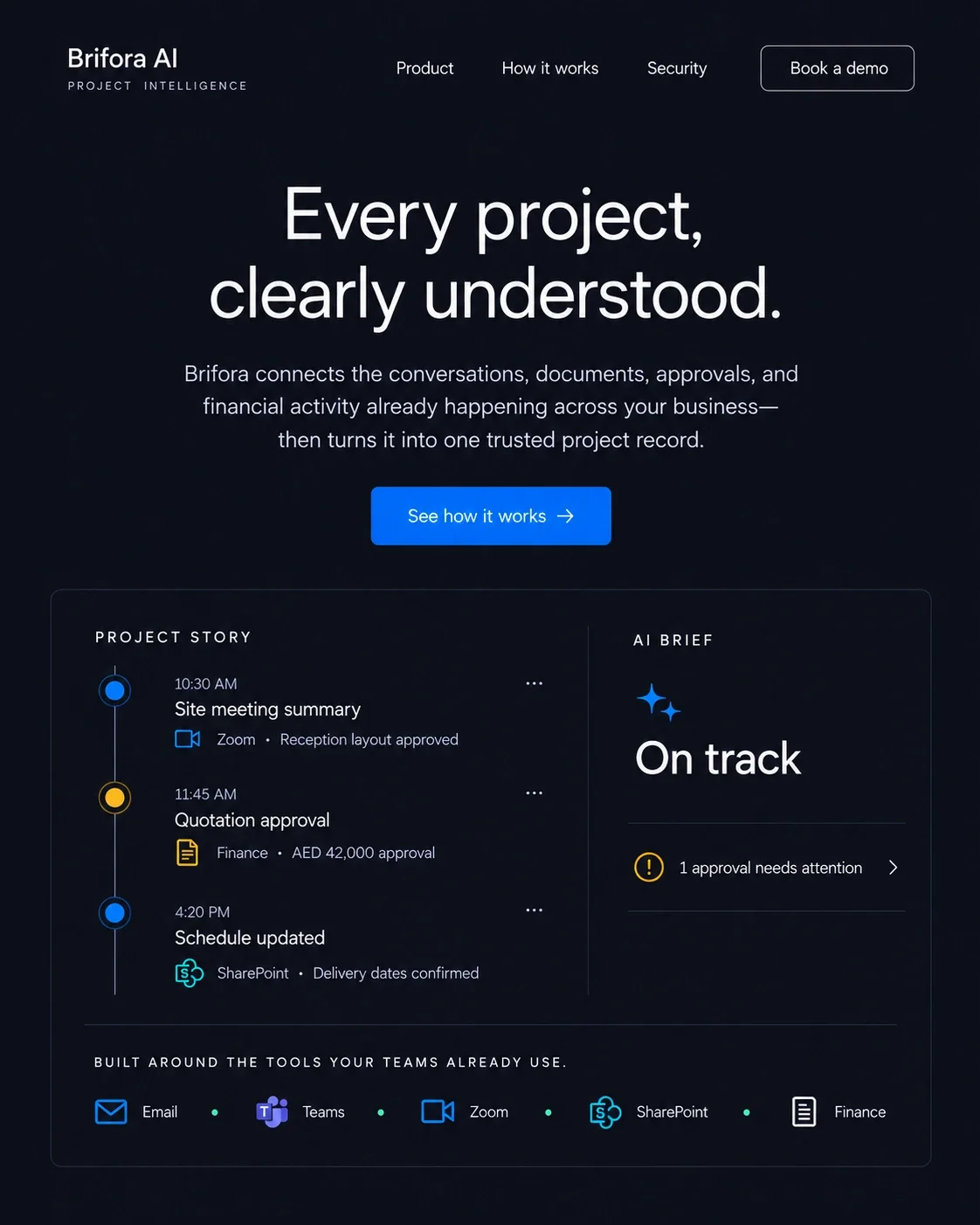
An approval shouldn’t depend on a reminder. A sales order shouldn’t need entering twice. A weekly report shouldn’t take half a day to prepare. Automation connects these everyday tasks across your applications, reducing manual handoffs and keeping information consistent. Clear rules determine what happens next, while exceptions go to the right person. Your team spends less time coordinating the process and more time completing the work.

Why Us?








Trust The Facts
Testimonials
Infocore felt like an extension of our own team from day one. They were honest about what was possible, kept every promise on timing, and treated our business as if it were their own. That kind of trust is rare.
Faster turnaround
Higher delivery reliability
What stood out was how deeply Infocore understands the technology. They took a complex problem, designed a clean, intelligent solution, and built it properly the first time. Real engineering, not shortcuts.
Faster processing
Fewer engineering defects
Working with Infocore is genuinely easy. They listen, explain things in plain language, and are always quick to respond. You never feel like just another client, and that makes all the difference.
Faster responses
More inquiries handled
Infocore helped us rethink how we work, not just what tools we use. Their team brought clear ideas on automation, delivered with professionalism, and stayed with us well after launch. A partner we'd recommend without hesitation.
Less manual work
More workflows automated
Questions
How do you protect sensitive business data when using AI?
Privacy begins with clear boundaries. Before AI is connected to any business system, it is important to define what information it can access, where that information is stored, and who is permitted to use it. Not every file, conversation, or database needs to be available to the AI. A secure setup can use a private knowledge layer, giving AI controlled access to approved information only when it is needed. This helps teams receive useful, relevant answers without placing sensitive business data into public AI tools. Access permissions, encryption, audit trails, retention rules, and human approval for sensitive actions help keep the environment secure and accountable. Where required, AI can also operate within an existing cloud tenant or private infrastructure.
Where can AI genuinely improve our business?
We start with the business problem, not the technology. We identify work that is repetitive, slow, or data-heavy, then test AI where it can deliver a measurable result. For example, AI can organize support requests, review documents, improve forecasting, or help employees find information faster. Your data remains protected, and your team stays in control.
Why build custom software when ready-made solutions already exist?
Not every business needs custom software and we do not recommend a custom solution unless it creates clear value. For standard needs, ready-made software is often faster and more cost-effective. Custom software becomes valuable when existing tools force your team to use manual workarounds, cannot connect with important systems, limit access to your data, or restrict the customer experience you want to create. For example, if sales, approvals, and service delivery are managed across several disconnected tools, a custom platform can bring them into one secure workflow. This reduces errors, saves time, and gives you control over your data, features, and future development. We help you compare the cost, risk, and long-term value of buying versus building so you invest only where it makes business sense.
Our Toolset
Initial Consultation
Discuss project goals, requirements, and timeline. Understand client needs to provide tailored solutions.
Project Planning
Develop a detailed project plan, including milestones and deliverables, ensuring alignment with client expectations.
Design & Prototyping
Create wireframes and design prototypes. Get client feedback to refine and finalize the design before development.
Development Phase
Build and integrate features, ensuring quality and functionality. Regular updates and reviews with the client.
Testing & QA
Thoroughly test the project for bugs and issues. Conduct client review and final adjustments before launch.
Launch & Maintenance
Deploy the project live. Provide ongoing support, updates, and maintenance to ensure long-term success.
Contact Us
Tell us about your project or ask us any questions
Message received. Let's build something great.
Thanks for reaching out to Infocore. Our team will review your request and get back to you within one business day.
Something went wrong. Please try again or email hello@infocore.ai.
Latest Posts
Is your business data ready for AI transformation? Use this practical AI readiness checklist to assess your data quality, security, governance, permissions, integrations, and AI use cases. Identify your readiness gaps, prioritize what needs fixing, and take the first step toward building a secure and scalable AI foundation for your business.
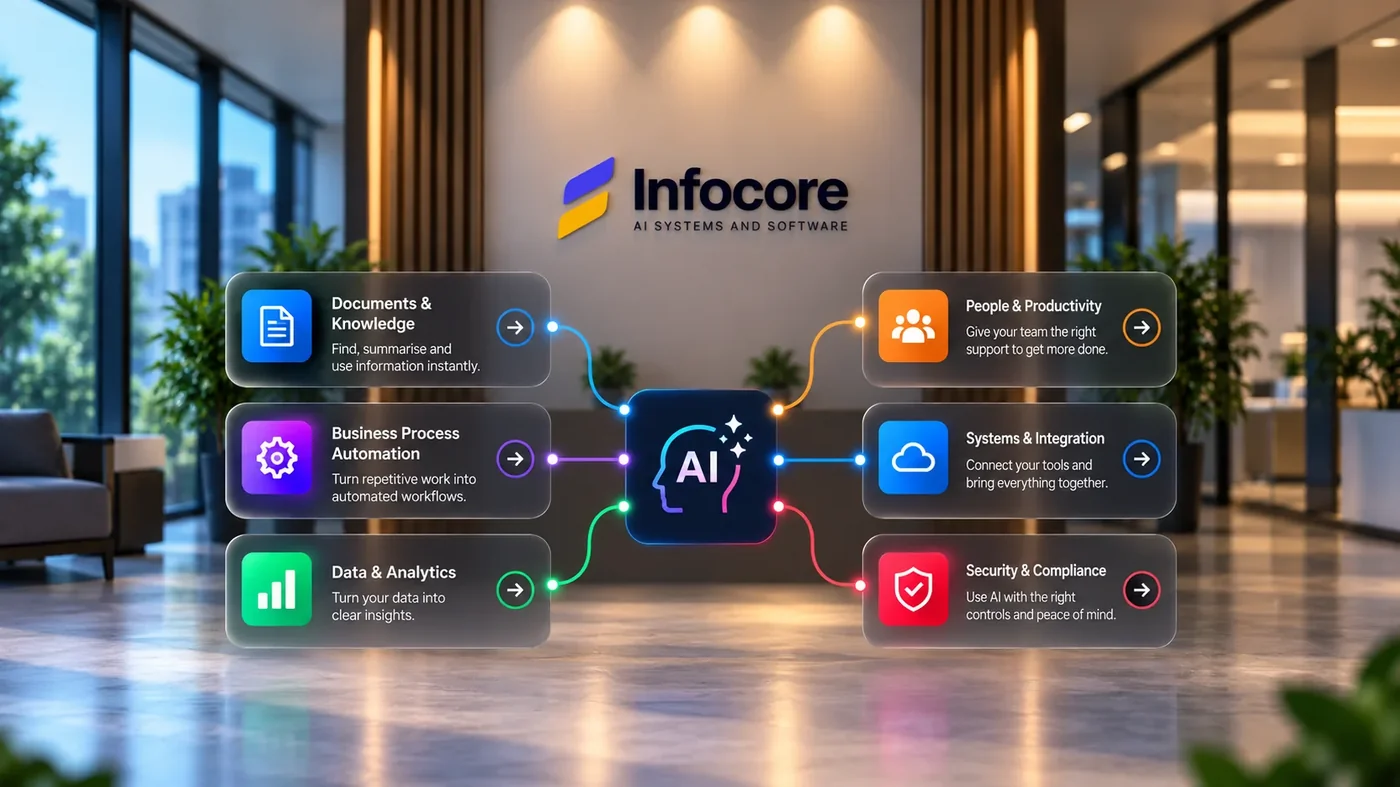
If your team spends more time working around software than working with it, the problem may not be your process. It may be the software itself. When your systems do not reflect how your business actually operates, you end up paying for technology while still doing the real work manually.
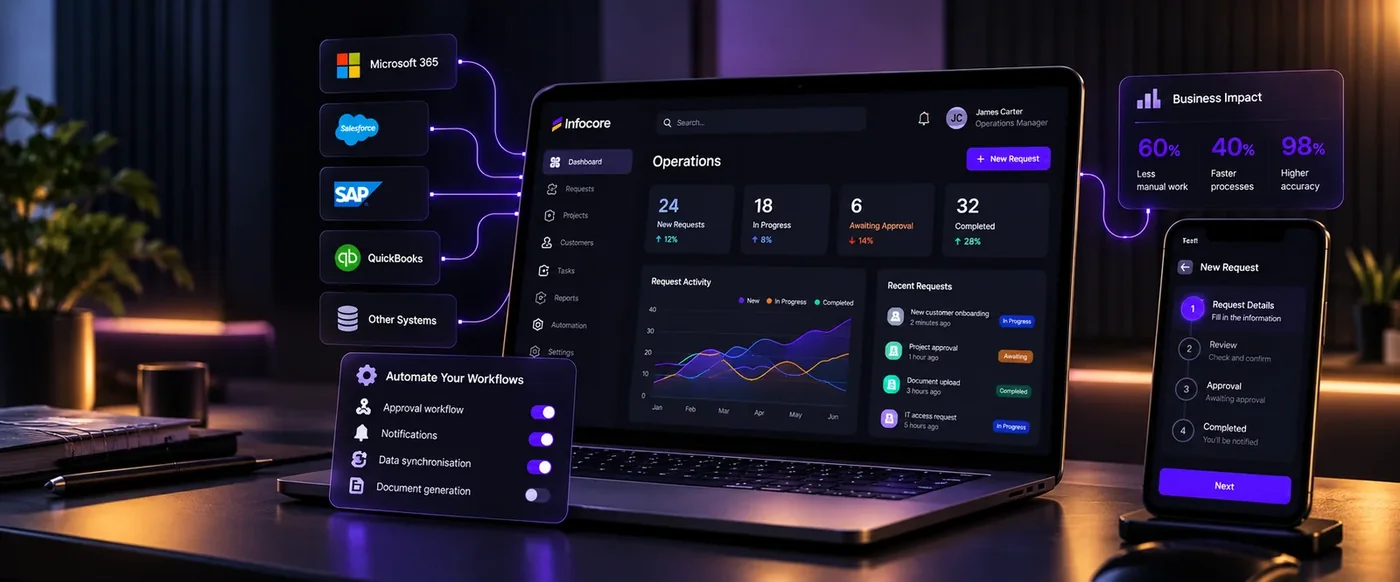
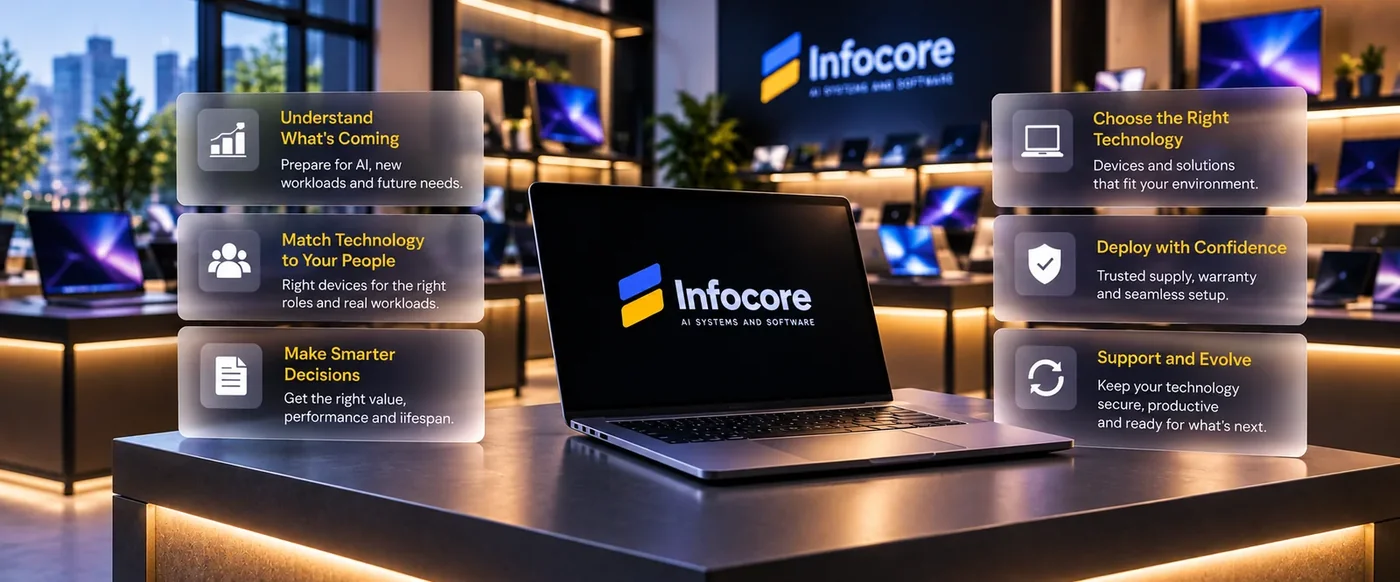
If your business only replaces technology when something becomes slow, unsupported or broken, the problem may not be the hardware itself. It may be the way IT decisions are being made. When every purchase is reactive, you can end up spending more while still falling behind.